Tissus de qualité et magnifique. Le choix est large . Je trouve toujours un tissu à mettre dans le panier ! Livraison rapide
Toujours satisfaite de la qualité et du soin de la confection du colis et des petites attentions. Ça fait le plus.
Oeko-Tex® certification, organic certification, or GOTS certification… You're probably familiar with them. And for good reason! They are the three most widespread textile certifications. But how do you distinguish between all these certifications? What are the differences between organic and GOTS fabrics? Which fabric is the most fair trade, ecological, or ethical? We'll tell you everything!

In recent years, eco-certifications have been booming. According to Agence Bio , the French organic market grew by over 13% in 2019 compared to 2018. This market growth, along with public opinion, is pushing companies to develop organic products and/or products that respect producers' working conditions, and the textile industry is no exception . From ready-to-wear clothing and furniture to creative hobbies , all sectors of the textile industry proudly display their environmental commitment on their products. But what does this commitment actually mean? Is an organic textile more responsible than a non-certified one?
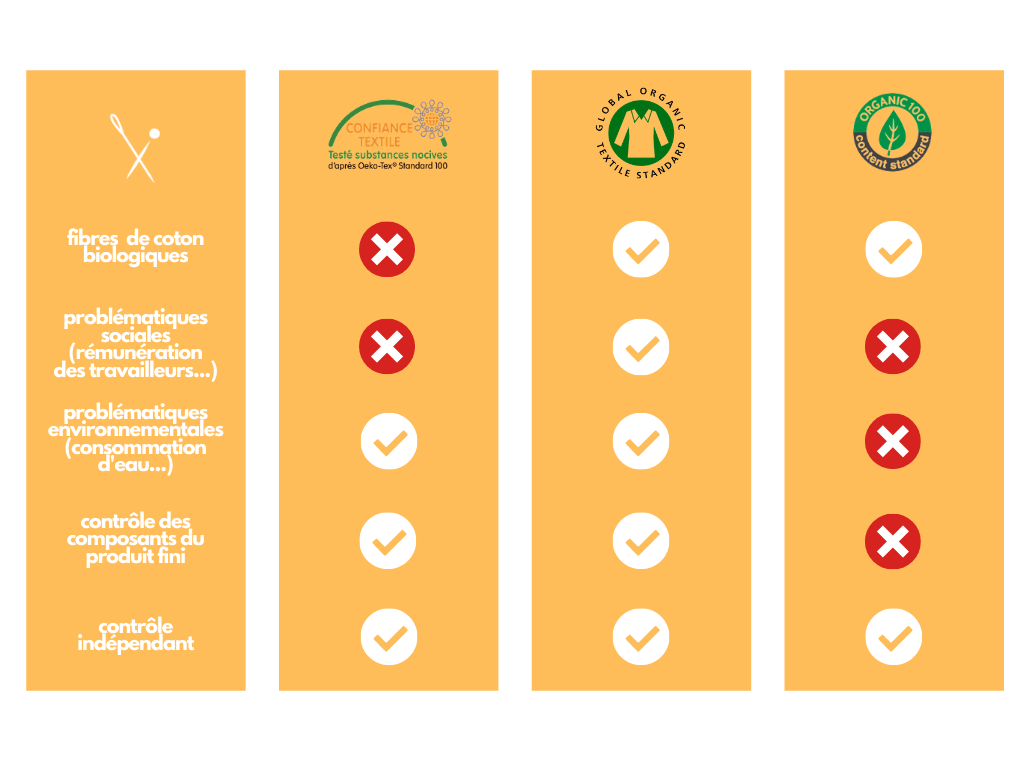
To answer the question above: no, an organic textile is not necessarily more responsible than a non-certified textile . To understand this inconsistency, we need to look at how the fabric is made. For an organic fabric, for example, only the cotton fields are treated without pesticides. The transport of the cotton, workers' wages, or even the dyeing process are not taken into account in the certification. As for a GOTS-certified fabric, the entire production, manufacturing, and marketing process is controlled.
To better understand these differences, here is an explanatory table of the similarities and differences of each textile certification:

It stands out thanks to its ultra-soft, velvety feel and small, bubble-like textures, which add an extra sensory dimension. It brings a touch of whimsy and volume to all your creations.
Perfect for sewing projects for toddlers and older children alike, it's ideal for making baby accessories, cozy blankets, comforting cuddly toys…
You can find it in a wide range of colors, each as soft as the next.
But be warned… Once you touch it, you'll never want to let go!
Minky fabric is a slightly stretchy fabric that requires some precautions when sewing:
- Use a Jersey or stretch needle to preserve its fibers.
- Opt for fabric clips rather than pins, which could mark the fabric.
- Sew with a stretch stitch for a more flexible finish
- Wash before use to remove static electricity and improve durability.
You can machine wash it at 30°C .
We advise against using a tumble dryer on this fabric, as well as ironing it .
** REMEMBER TO WASH YOUR FABRICS BEFORE WORKING WITH THEM**
**Shrinkage after washing: 6% max .**

----------------------------------------------------------------------------------------------
PROFESSIONAL DISCOUNTS :
Once your "Professional" account is activated, you will benefit from discounts that will automatically be applied to your basket.
These discounts vary depending on the amount of your basket.

----------------------------------------------------------------------------------------------
SHIPPING :
When you are a professional, your order is given priority. We therefore commit to shipping your orders within a maximum of 2 business days.
----------------------------------------------------------------------------------------------
EXCHANGES & CONTACT :
Feel free to contact us by email ( lapoulequicoud@outlook.com ) or directly through the homepage's direct messaging system. We will respond as soon as possible.
----------------------------------------------------------------------------------------------
ACCOUNT ACTIVATION :
Activating your account and benefiting from discounts couldn't be simpler:

Marie & Sébastien, The Hen Who Sews Fabrics
Oeko-Tex® certification, organic certification, or GOTS certification… You're probably familiar with them. And for good reason! They are the three most widespread textile certifications. But how do you distinguish between all these certifications? What are the differences between organic and GOTS fabrics? Which fabric is the most fair trade, ecological, or ethical? We'll tell you everything!

In recent years, eco-certifications have been booming. According to Agence Bio , the French organic market grew by over 13% in 2019 compared to 2018. This market growth, along with public opinion, is pushing companies to develop organic products and/or products that respect producers' working conditions, and the textile industry is no exception . From ready-to-wear clothing and furniture to creative hobbies , all sectors of the textile industry proudly display their environmental commitment on their products. But what does this commitment actually mean? Is an organic textile more responsible than a non-certified one?
To answer the question above: no, an organic textile is not necessarily more responsible than a non-certified textile . To understand this inconsistency, we need to look at how the fabric is made. For an organic fabric, for example, only the cotton fields are treated without pesticides. The transport of the cotton, workers' wages, or even the dyeing process are not taken into account in the certification. As for a GOTS-certified fabric, the entire production, manufacturing, and marketing process is controlled.
To better understand these differences, here is an explanatory table of the similarities and differences of each textile certification:

It stands out thanks to its ultra-soft, velvety feel and small, bubble-like textures, which add an extra sensory dimension. It brings a touch of whimsy and volume to all your creations.
Perfect for sewing projects for toddlers and older children alike, it's ideal for making baby accessories, cozy blankets, comforting cuddly toys…
You can find it in a wide range of colors, each as soft as the next.
But be warned… Once you touch it, you'll never want to let go!
Minky fabric is a slightly stretchy fabric that requires some precautions when sewing:
- Use a Jersey or stretch needle to preserve its fibers.
- Opt for fabric clips rather than pins, which could mark the fabric.
- Sew with a stretch stitch for a more flexible finish
- Wash before use to remove static electricity and improve durability.
You can machine wash it at 30°C .
We advise against using a tumble dryer on this fabric, as well as ironing it .
** REMEMBER TO WASH YOUR FABRICS BEFORE WORKING WITH THEM**
**Shrinkage after washing: 6% max .**

----------------------------------------------------------------------------------------------
PROFESSIONAL DISCOUNTS :
Once your "Professional" account is activated, you will benefit from discounts that will automatically be applied to your basket.
These discounts vary depending on the amount of your basket.

----------------------------------------------------------------------------------------------
SHIPPING :
When you are a professional, your order is given priority. We therefore commit to shipping your orders within a maximum of 2 business days.
----------------------------------------------------------------------------------------------
EXCHANGES & CONTACT :
Feel free to contact us by email ( lapoulequicoud@outlook.com ) or directly through the homepage's direct messaging system. We will respond as soon as possible.
----------------------------------------------------------------------------------------------
ACCOUNT ACTIVATION :
Activating your account and benefiting from discounts couldn't be simpler:

Marie & Sébastien, The Hen Who Sews Fabrics
Tissus de qualité et magnifique. Le choix est large . Je trouve toujours un tissu à mettre dans le panier ! Livraison rapide
Toujours satisfaite de la qualité et du soin de la confection du colis et des petites attentions. Ça fait le plus.