Les tissus sont beaux et de qualité. La livraison est rapide. Je ne suis jamais déçue!
Joli choix de tissus
Envoi rapide et soigné !
Produits envoyés rapidement et conformes à mes attentes. Je recommande.

Find samples of the 10 colors of Velours 500 raies in this color chart:
The color chart is labeled and allows you to avoid making mistakes in choosing colors.
For professionals, it's a real working tool that will allow your clients to directly select the color of their choice.
Oeko-Tex® certification, organic certification, or GOTS certification… You're probably familiar with them. And for good reason! They are the three most widespread textile certifications. But how do you distinguish between all these certifications? What are the differences between organic and GOTS fabrics? Which fabric is the most fair trade, ecological, or ethical? We'll tell you everything!

In recent years, eco-certifications have been booming. According to Agence Bio , the French organic market grew by over 13% in 2019 compared to 2018. This market growth, along with public opinion, is pushing companies to develop organic products and/or products that respect producers' working conditions, and the textile industry is no exception . From ready-to-wear clothing and furniture to creative hobbies , all sectors of the textile industry proudly display their environmental commitment on their products. But what does this commitment actually mean? Is an organic textile more responsible than a non-certified one?
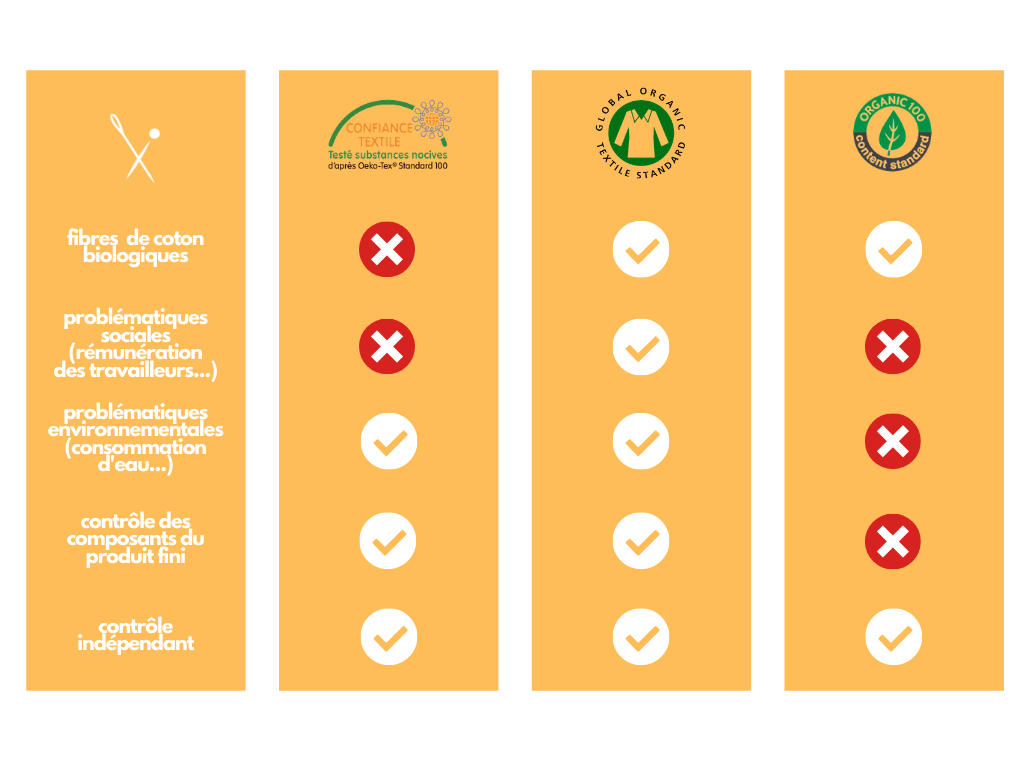
To answer the question above: no, an organic textile is not necessarily more responsible than a non-certified textile . To understand this inconsistency, we need to look at how the fabric is made. For an organic fabric, for example, only the cotton fields are treated without pesticides. The transport of the cotton, workers' wages, or even the dyeing process are not taken into account in the certification. As for a GOTS-certified fabric, the entire production, manufacturing, and marketing process is controlled.
To better understand these differences, here is an explanatory table of the similarities and differences of each textile certification:

Oeko-Tex® certification, organic certification, or GOTS certification… You're probably familiar with them. And for good reason! They are the three most widespread textile certifications. But how do you distinguish between all these certifications? What are the differences between organic and GOTS fabrics? Which fabric is the most fair trade, ecological, or ethical? We'll tell you everything!
In recent years, eco-certifications have been booming. According to Agence Bio , the French organic market grew by over 13% in 2019 compared to 2018. This market growth, along with public opinion, is pushing companies to develop organic products and/or products that respect producers' working conditions, and the textile industry is no exception . From ready-to-wear clothing and furniture to creative hobbies , all sectors of the textile industry proudly display their environmental commitment on their products. But what does this commitment actually mean? Is an organic textile more responsible than a non-certified one?
To answer the question above: no, an organic textile is not necessarily more responsible than a non-certified textile . To understand this inconsistency, we need to look at how the fabric is made. For an organic fabric, for example, only the cotton fields are treated without pesticides. The transport of the cotton, workers' wages, or even the dyeing process are not taken into account in the certification. As for a GOTS-certified fabric, the entire production, manufacturing, and marketing process is controlled.
To better understand these differences, here is an explanatory table of the similarities and differences of each textile certification:
Les tissus sont beaux et de qualité. La livraison est rapide. Je ne suis jamais déçue!
Joli choix de tissus
Envoi rapide et soigné !
Produits envoyés rapidement et conformes à mes attentes. Je recommande.